 An official website of the Cuyahoga County government. Here’s how you know



Firefighter
Average Pay: $59,530/year or $28.62/hour
Education: High School Diploma/GED and postsecondary instruction/certification
Work Location: On-site and in the field
What is a Firefighter
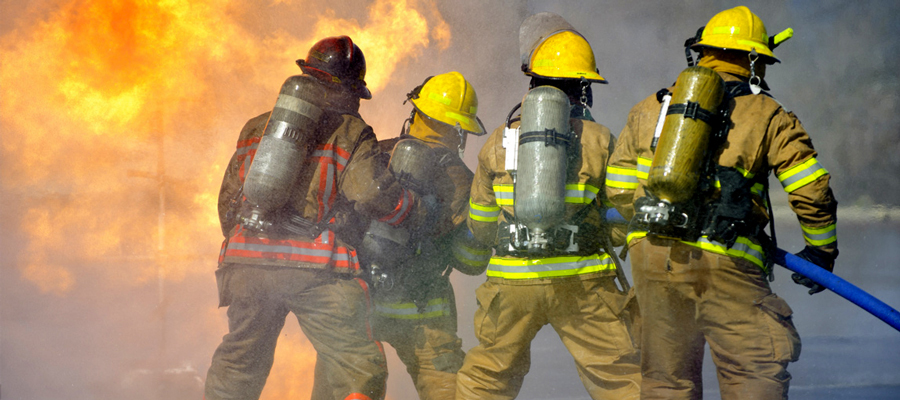
Firefighters respond to many types of emergencies and play an important role in the community, more than just putting out fires. This includes emergency medical response, building inspections to enforce fire safety standards, preparedness planning, and community education.
Basic Duties
Daily assignments vary, but job duties may include fire suppression, emergency medical response, search and rescue operations, response to various incidents: traffic accidents hazardous material/chemical incidents; fire investigation, fire safety community education, filing incident reports, equipment/vehicles/station maintenance, training exercises, building inspections, and much more.
Hiring Roadmap
Typical Entry-Level Requirements
- Must be at least 18 years old.
- Have a valid driver’s license.
- A high school diploma or equivalent.
- Complete EMT training/Paramedic School (Basic, Intermediate, & Paramedic) and pass the state/national test.
- Complete the State Firefighter Certification training and pass the state test (typically referred to as Firefighter 1 & 2 certifications).
- Complete Physical Agility Test (PAT). Locally offered at Tri-C or Auburn Career Center . Check with the department to see who they accept PAT from.
- Apply to take civil service test - each department has their own schedules for testing.
- Additional interviews and evaluations may occur such as medical evaluation, criminal history/background check, and psychological evaluation.
Training
Entry-level firefighters receive a few months of training at fire academies run by the fire department or by the state. Recruits learn firefighting and fire-prevention techniques, local building codes, and emergency medical procedures. They also learn how to fight fires with standard equipment, including axes, chain saws, fire extinguishers, and ladders. After attending a fire academy, firefighters usually must complete a probationary period.
In addition to participating in training programs conducted by local or state fire departments and agencies, some firefighters attend federal training sessions sponsored by the National Fire Academy. These sessions cover topics including anti-arson techniques, disaster preparedness, hazardous materials control, and public fire safety and education.
Continuing education is required to maintain these credentials.
Average Pay & Benefits
National median average per US Bureau of Labor Statistics: $59,530 per year or $28.62 per hour.
Benefits will vary by department and your hours of employment. Full-time employees often receive medical, dental, vision, paid time off, holiday pay, overtime pay, uniform allowance, retirement/pension plan.
Work Environment
Report to fire station for work. Schedules typically are 24-hour shifts on duty, followed by 48 or 72 hours off duty. Some departments may offer part time positions and shifts will vary.
When responding to an emergency, firefighters often wear protective gear, which can be very heavy and hot. On call at fire stations, firefighters sleep, eat, and do other non-emergency tasks, such as work on equipment or training.
Where Can You Work
There are 52 fire departments in Cuyahoga County. You can search department openings here.
WHY CHOOSE A CAREER IN PUBLIC SAFETY
Because they are in HIGH DEMAND.
Due to ongoing needs for public protection, emergency response, and legal services there are many opportunities available within in the career field of public safety.
Job Opportunities at Cuyahoga County Local Municipality Job Listings See List of Local Agencies Public Service Career FAQs